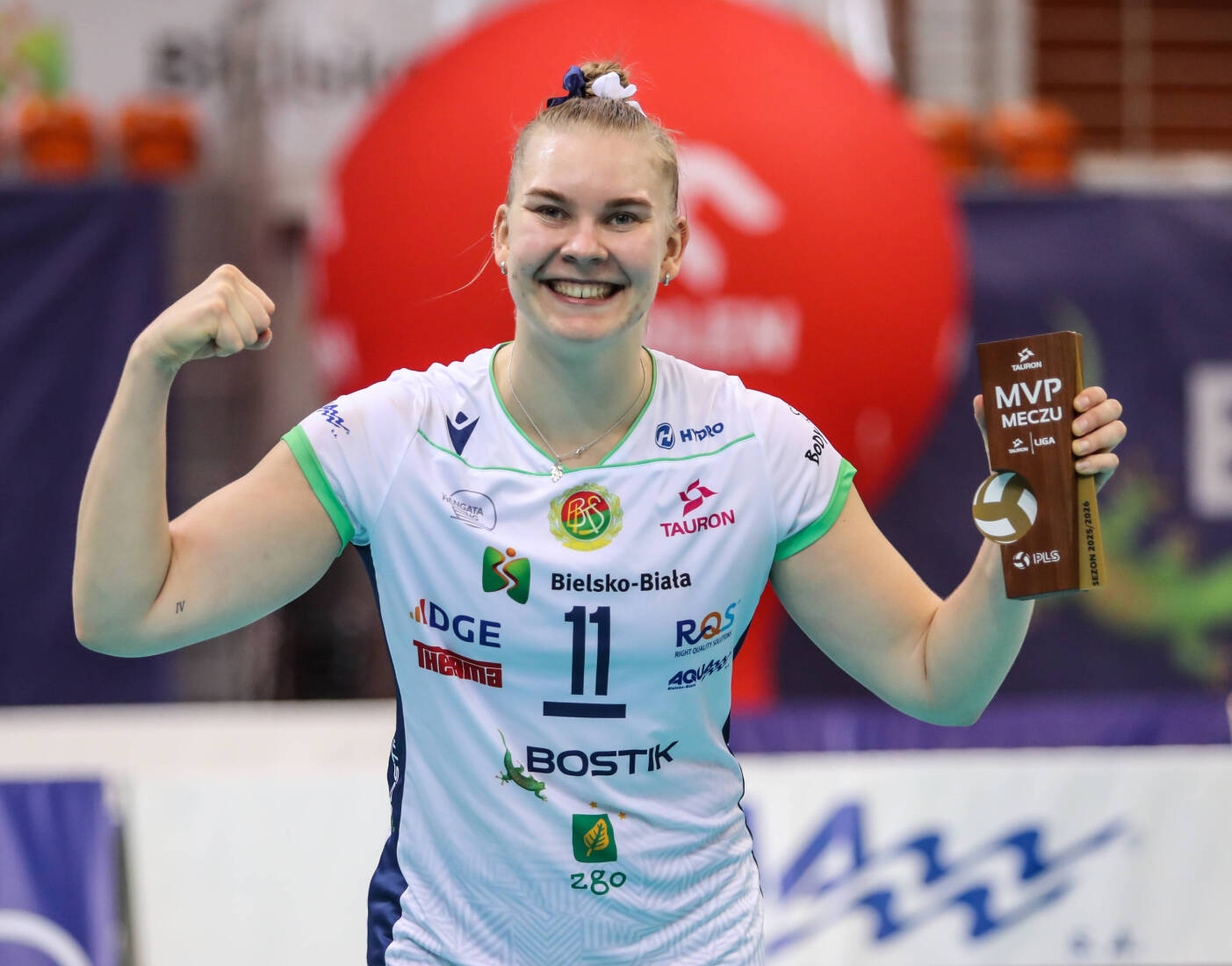
 Po bolesnej porażce BKS BOSTIK ZGO Bielsko-Biała w jubileuszowym, 1500. meczu w najwyższej klasie rozgrywkowej, porozmawialiśmy z Kertu Laak — jedną z liderek zespołu. Estońska atakująca opowiedziała o przyczynach nieudanej rywalizacji z UNI Opole, problemach drużyny, presji, emocjach oraz tym, czego BKS najbardziej potrzebuje, by wrócić na właściwe tory. To szczera rozmowa o odpowiedzialności, mentalności i poszukiwaniu stabilności.
Zuzanna Żeleźnik: Kertu, to był dla Was bardzo trudny wieczór. Jak z Twojej perspektywy wyglądał ten mecz i czego najbardziej zabrakło, żeby nawiązać równą walkę z UNI Opole?
Kertu Laak: Myślę, że kluczowym słowem był atak. Opole grało świetnie w systemie blok–obrona, nie potrafiłyśmy kończyć swoich akcji, a kiedy tylko miały okazję do kontrataku, były bardzo skuteczne.
W kilku fragmentach meczu próbowałaś poderwać zespół swoją grą. Co czułaś, widząc, że mimo wszystko drużyna nie potrafiła wejść na swój poziom?
Bez wątpienia miałyśmy problemy — ja również. Każda z nas próbowała przez cały mecz znaleźć swój rytm. To powodowało frustrację, szczególnie pod koniec, bo trudno zachować jasność myślenia, kiedy czujesz, że mecz nie układa się po Twojej myśli. Wiemy, jaki potencjał mamy i jak potrafimy grać, ale w tym spotkaniu nie byłyśmy sobą.
UNI Opole od początku narzuciło dużą presję zagrywką. Jak bardzo wpłynęło to na Waszą efektywność w ataku i organizację gry?
Uważam, że nasze przyjęcie było naprawdę dobre — statystyki to potwierdziły. Problemem była raczej współpraca po przyjęciu i indywidualne decyzje zawodniczek. Nad tym na pewno będziemy pracować, by nabrać większej pewności.
W ostatnich kolejkach drużyna zmaga się z problemami w przyjęciu i stabilności. Czy to według Ciebie największa bolączka BKS-u?
Stabilność to na pewno coś, nad czym musimy się skupić i co od dawna jest problemem. Ale moim zdaniem przyjęcie nie jest naszym największym kłopotem. Bardziej brakuje nam pewności siebie i wzajemnego „czucia się” na boisku. Nad tym świadomie pracujemy.
Jako jedna z liderek — jak starasz się motywować drużynę, gdy gra się nie układa?
Przede wszystkim staram się utrzymywać wysoki poziom swoich zadań i pociągnąć zespół za sobą, kiedy mi wychodzi. Skupiam się na uspokajaniu dziewczyn, gdy robi się nerwowo, oraz na celebrowaniu każdego punktu, by dać maksymalnie dużo energii.
Wczoraj BKS rozegrał wyjątkowy, 1500. mecz w najwyższej lidze. Czy to wywołało dodatkowe emocje lub presję?
Emocje poczułam dopiero po meczu. Zdałam sobie sprawę, że to nie był najlepszy dzień na taki występ… ale nie odbiera nam to dumy z osiągnięcia tego kamienia milowego. Przed i w trakcie meczu myślałyśmy tylko o planie gry.
Czy porażka właśnie w tym jubileuszowym meczu boli bardziej? Jak wyglądała atmosfera w szatni?
Tak, było mi bardzo przykro zaraz po meczu, zwłaszcza widząc kibiców, którzy nadal nas wspierali. Chcemy wygrywać dla siebie, ale także dla fanów. Kiedy ich zawodzimy, same czujemy rozczarowanie. Atmosfera nie była wesoła, ale wspierałyśmy się nawzajem. To ważne, by nie dusić emocji w sobie — mamy takie estońskie powiedzenie: „dzielony problem staje się o połowę mniejszy”. I naprawdę w to wierzę.
Czego najbardziej brakuje Wam, by wrócić do poziomu z poprzedniego sezonu — stabilności, pewności siebie, zgrania?
Myślę, że mamy dobrą chemię. Chcemy być bardziej stabilne i grać z większą pewnością. Ważne, by nie tracić iskry i zaufania po tych dwóch porażkach — sezon jest długi, a my podjęłyśmy wyzwanie, by z tego wyjść.
Jak radzisz sobie z presją, gdy zespół jest w trudniejszym okresie?
Jestem perfekcjonistką, co bywa błogosławieństwem i przekleństwem. Zawsze widzę coś, co można poprawić, czasem zapominając docenić rzeczy, które robię dobrze. Nauczyłam się jednak mówić o swoich trudnościach. Mam wielkie wsparcie w drużynie, rodzinie i przyjaciołach — to pomaga nabrać perspektywy i nie zapominać o radości z gry.
W kolejnej kolejce zagracie z ŁKS-em Commercecon. Co musicie poprawić w pierwszej kolejności?
Kluczowe będzie pozostać agresywnymi, otwartymi i pamiętać o swoich najmocniejszych stronach. Każdy mecz to nowy początek i nowa szansa na poprawę — musimy po prostu z tego korzystać.
Ang.
After a tough loss in BKS BOSTIK ZGO Bielsko-Biała’s milestone 1500th match in the Polish top league, we spoke with Kertu Laak — one of the team’s key leaders. The Estonian opposite shared her thoughts on the defeat against UNI Opole, the team’s current struggles, pressure, emotions, and what BKS needs most to regain its form. A candid discussion about responsibility, mentality, and the search for stability.
Zuzanna Żeleźnik: Kertu, it was a very difficult evening for your team. From your perspective, what was missing to compete on equal terms with UNI Opole?
Kertu Laak: I think the main keyword was attack. Opole played great block-defense, we could not finish our attacks, and as soon as they had a transition opportunity, they were very effective.
At some moments you tried to lift the team with your plays. How did you feel seeing that the team still struggled to find its rhythm?
No doubt we were struggling, me as well. We all tried to find our rhythm throughout the match. It made us frustrated by the end, it’s hard to keep a clear head when it feels like the match is not going your way. We know our potential and how well we have played this season, but we didn’t show that level in this game.
UNI Opole put a lot of pressure with their serving. How did it affect your attacking efficiency and game organization?
I actually think our reception was great, statistics showed that. But something in the connection after reception was off, and also individual decision-making. We will try to work on that to feel more confident.
Recently your team has been struggling with reception and stability. Is this the biggest challenge for BKS right now?
Stability is definitely something we need to focus on. But in my opinion, reception is not our biggest problem. We lack confidence and connection on court, and we try to consciously work on that.
As one of the leaders — how do you try to support and motivate the team when things aren’t going well?
I try to keep my own performance at a high level, and bring the team with me during the good moments. I also try to calm my teammates when things get hectic, and celebrate every point loudly to add as much energy as possible.
Yesterday BKS celebrated its 1500th top-league match. Did it bring extra emotions or pressure on court?
I only felt the emotions after the match. Then I realized it wasn’t the best day to play a game like this… but it didn’t take away our pride in the club reaching this milestone. Before and during the match, we were fully focused on the game plan.
Do you feel that losing this milestone match hurts more? What was the atmosphere like afterward?
Like I said, I felt bad right after the match, seeing all the fans who were still cheering. We want to win for ourselves, but also for them. When we disappoint them, we feel disappointed too. It wasn’t the happiest night, but we supported each other — you shouldn’t keep hard emotions to yourself. There’s a saying in Estonia that a shared problem is twice smaller, and I truly believe that.
What does the team need now to return to last season’s level — stability, confidence, chemistry?
I think we have chemistry. We want more stability and more confidence. We must not lose our spark and trust — the season is still young and we accept the challenge to overcome this.
How do you personally handle pressure during a difficult stretch?
I’m a perfectionist — a blessing and a curse. I always find things to improve, sometimes forgetting to focus on what I already do very well. Luckily, I’ve learned to open up when I struggle, and I have a great support system in the team and at home. It helps to put everything in perspective and remember to enjoy the process.
Your next match is against ŁKS Commercecon Łódź. What needs to be improved first to fight for a better result?
I think we must remain aggressive, keep an open mind, and remember to use our strongest qualities. Every match is a new opportunity, and we must enjoy it.
Rozmawiała: Zuzanna Żeleźnik
Źródło: informacja własna, fot. Tauron Liga
 Echo Siatkówki